



تشغيل مطحنة الشد
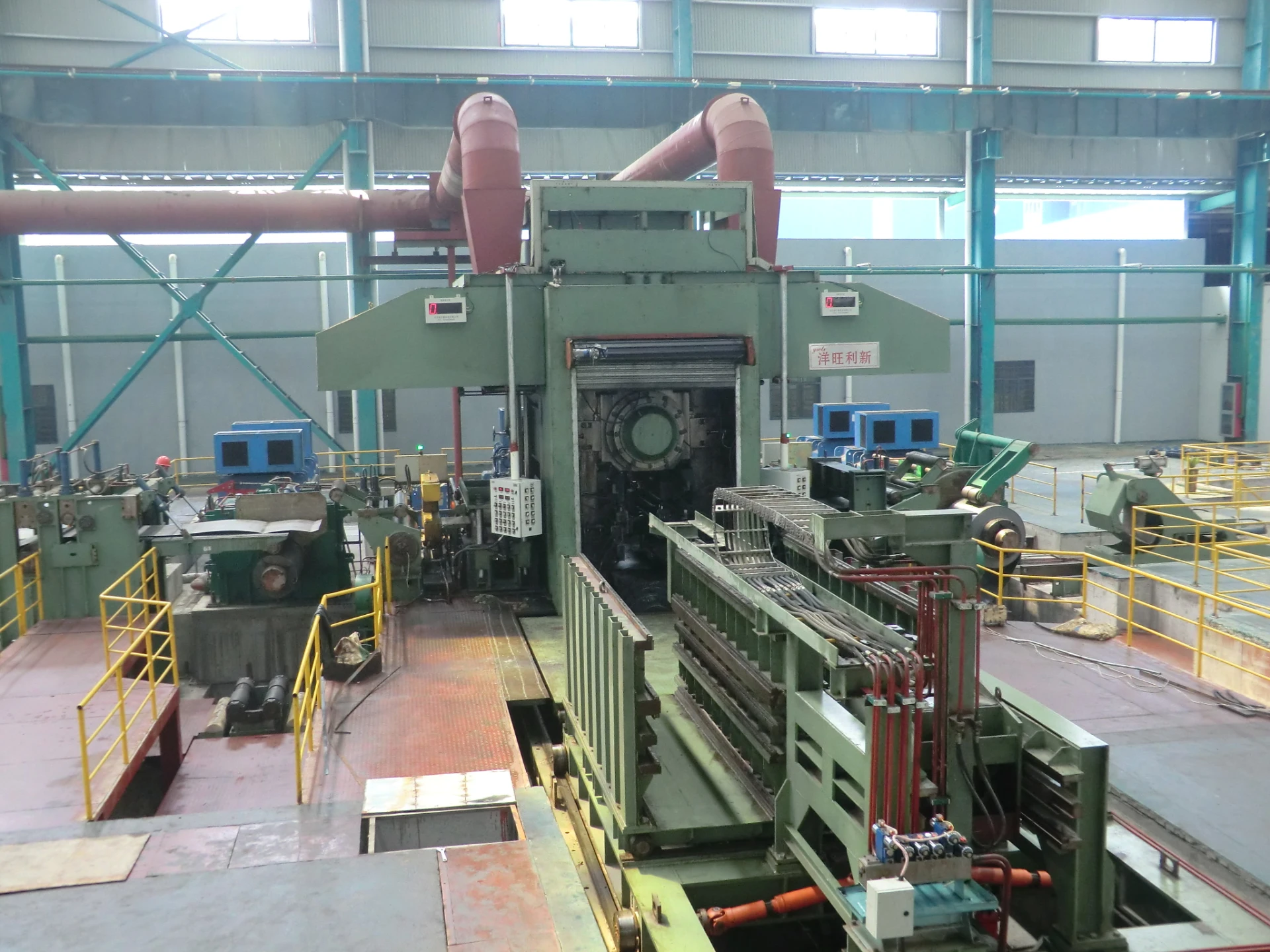
/Inside a modern tandem cold mill : notes from the shop floor A quick confession: the first time I stood beside a five-stand line at speed, the hiss of emulsion and the tight hum of drives felt… orchestral. Today’s tandem cold mill tech is less about brute force and more about clever control—flatness algorithms, predictive maintenance, and energy recovery that actually moves the needle. What’s new in the market (and what isn’t) Three themes dominate: higher reductions in one pass, wider strip capability for EV and appliance steel, and smarter automation that trims scrap. Surprisingly, many customers say the biggest day-to-day win is stability—less gauge chatter, fewer cobbles. The YWLX five-stand line out of Beijing leans into that, pairing double tension reels with flying shear and a magnetic conveyor to keep coil transitions clean. Address for the curious: No.1518, LAR Valley Int'l, Guangwai Avenue, Xicheng District, Beijing, 100055. Headline specs (real-world may vary) Configuration 5-stand tandem cold mill , double tension reels, flying shear, magnetic conveyor Input/Output Thickness ≈ 2.0–3.2 mm in / ≈ 0.18–1.2 mm out (grade-dependent) Strip Width up to ≈ 1,850 mm for wide-strip programs Line Speed up to ≈ 1,800 m/min (production), trials higher Max Reduction (single pass) 60–80% typical, depending on chemistry/lube Coil Weight ≈ 30–35 t Control Suite AGC/AFC, roll bending, work roll shifting, model-based flatness Process flow (how it runs on a good day) Materials: low-carbon, IF, HSLA up to ≈ 550 MPa; occasional tinplate base. Entry: pickled HR coils, welded; quick surface inspection. Emulsion: synthetic or semi-synthetic, 1.5–3% concentration; filtered, cooled. Reduction: five stands coordinate via AGC; threading assisted by magnetic conveyor. Flatness control: AFC + thermal crown models; target I-units ≤ 10 per EN 10131. Exit: double tension reel to stabilize thin gauges; flying shear for coil splits. Testing: gauge per ASTM A568; tensile per ISO 6892-1; roughness Ra per ISO 4287. Service life notes: work rolls run ≈ 8–20 campaigns between grinds; backup rolls ≈ 6–12 months before regrind, assuming normal loads. Uptime on mature lines often sits around 96%—to be honest, utilities and emulsion care make or break that number. Where it lands Automotive BIW, exposed and galvanized base. Appliances (whiter sheets, tighter flatness). Construction and HVAC coil; electrical enclosures. Advantages we saw (and what users say) High reduction in one pass means fewer reheats downstream. The magnetic conveyor smooths threading—less heartburn. A northern customer told me energy per ton dropped “around 7–9%” after tuning emulsion and AFC. Noise felt lower too, though I didn’t have a meter that day. Vendor landscape (quick reality check) Vendor Gauge Range Top Speed Automation Notes YWLX (Beijing) ≈ 0.18–3.2 mm ≈ 1,800 m/min AGC/AFC, model-based flatness Strong cost/performance; double tension reels standard SMS group ≈ 0.15–2.5 mm ≈ 2,000 m/min Advanced digital twins Premium options; deep global service Primetals ≈ 0.2–3.0 mm ≈ 1,900 m/min Neural flatness control Integration with upstream pickling Customization and two quick case notes Options: work-roll spray patterns, coolant filtration tiers, auto-grade setup, oil-mist recovery, CE-compliant guarding, remote diagnostics. Case A (APAC): target 0.25 mm IF steel; achieved flatness ≤ 8 I-units and CpK > 1.33 on gauge over 3 months. Case B (EMEA): retrofitted AFC model; scrap during threading fell ≈ 12% quarter-on-quarter. Compliance, testing, and data points Certifications typically include ISO 9001 and ISO 14001; machinery safety aligned with ISO 13849. Typical QA: gauge (ASTM A568), flatness (EN 10131), tensile (ISO 6892-1), surface roughness (ISO 4287). On a recent audit, mill yield ran ≈ 97.5%, coil-to-coil thickness deviation ≤ ±0.6% t on 0.5 mm sheet—solid for a tandem cold mill running mixed grades. References ASTM A568/A568M – Standard Specification for Steel, Sheet, Carbon. EN 10131 – Cold rolled uncoated low carbon steel flat products – Tolerances. ISO 6892-1 – Metallic materials — Tensile testing — Part 1. ISO 4287 – Geometrical Product Specifications (GPS) — Surface texture: Profile method. AIST, The Making, Shaping and Treating of Steel – Flat Rolling Technology.

We have successfully executed over 500
projects around the world,
many first-of-their-kind
research projects and products in China, including
We have successfully executed over 500
projects around the world,
many first-of-their-kind
research projects and products in China, including
-
2004
The 1st hydraulic AGC system for hot rolling of ribbon steel
-
2006
The 1st AFC system used for 1450mm skin pass mill
-
2009
The 1st 5-stand tandem line with 2-stand POR & Uncoiler for 650mm ribbon steel
-
2012
The 1st reversing mill for 1380mm strip
-
2016
The 1st soft-rolling system used in skin pass mill
-
2019
The 1st fully automated medium-width tandem cold rolling mill
-
2021
The 1st 5000KN Twin-stand double skin pass mill
-
2022
The 1st coupled pickling line & tandem cold mill with two modes - big roller & small roller
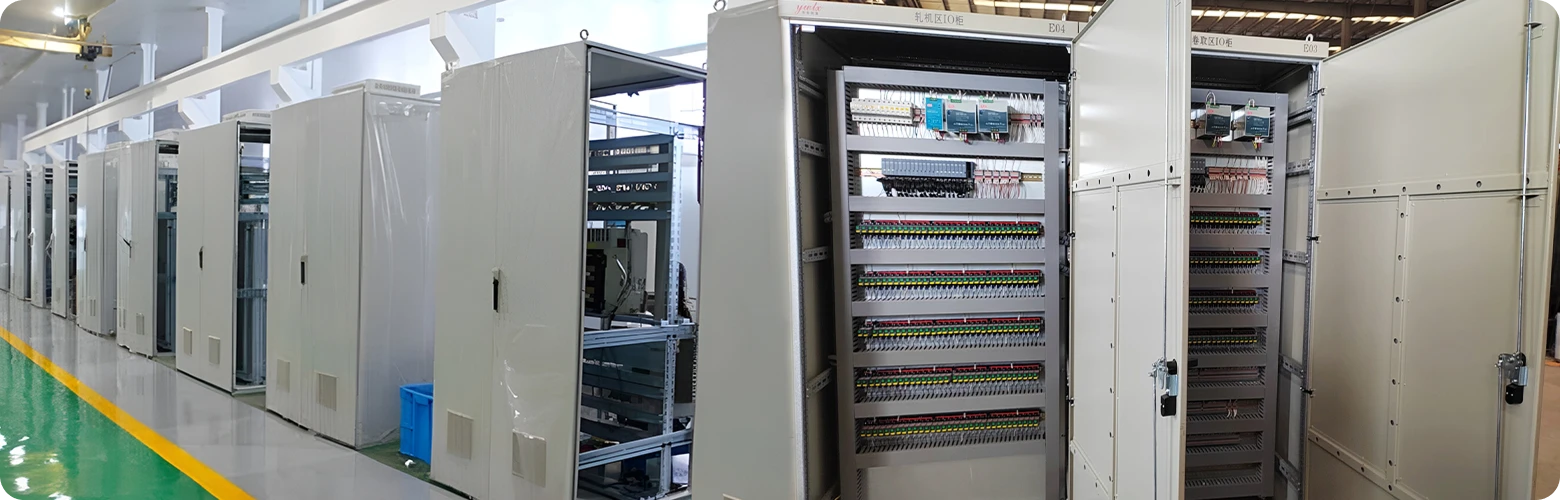

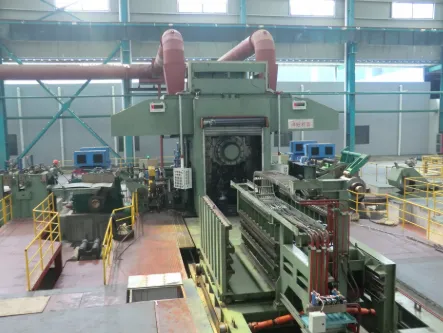
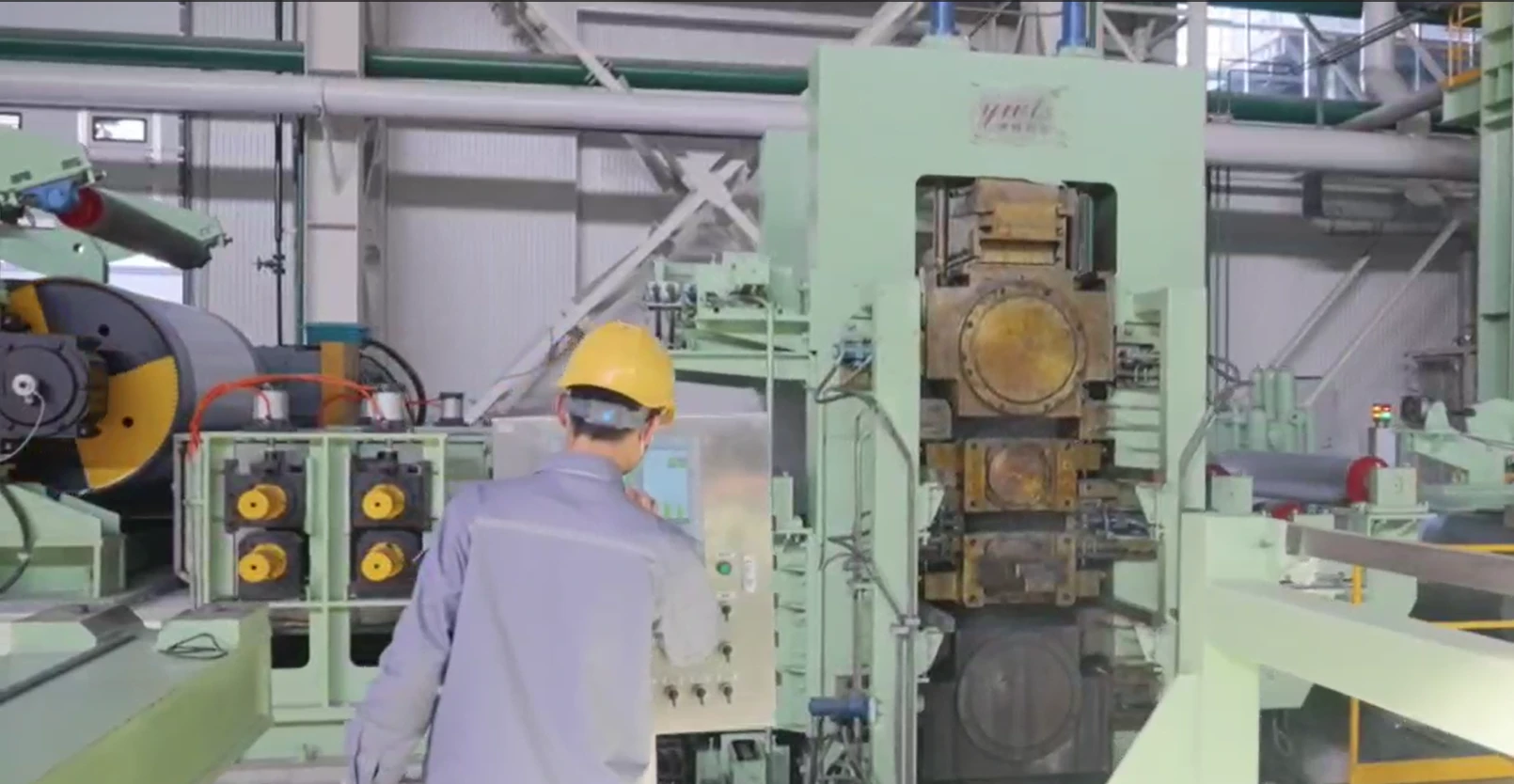
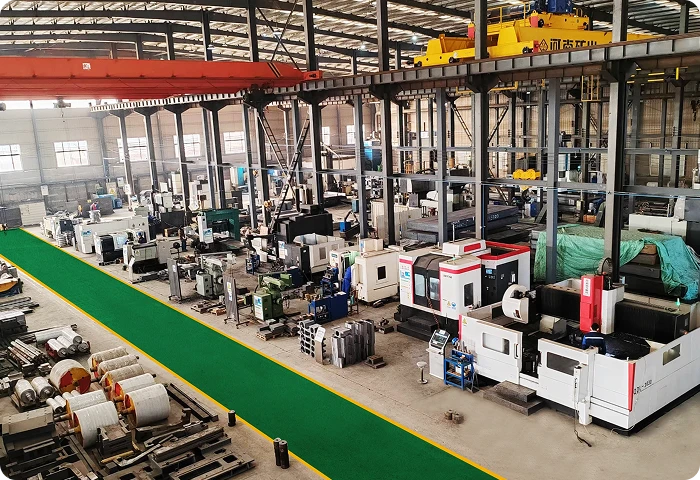
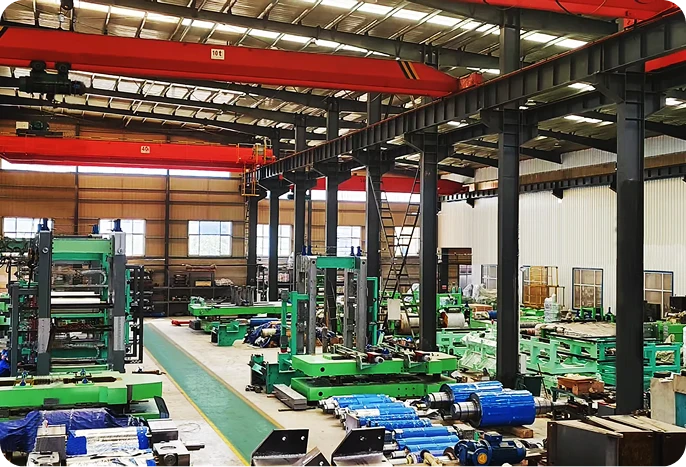
Yang Wang Li Xin operates a state-of-the-art facility over 66,000 square meters,and our manufacturing facility is fully equipped with high-tech machinery and high-capacity cranes. This enables us to handle large work pieces measuring 4.5m in width, 10m in length, and 1.5m in height, guaranteeing our capacity to produce 1800mm skin-pass mills and 1450mm rolling mills. The individual piece can weigh up to 100 tons.


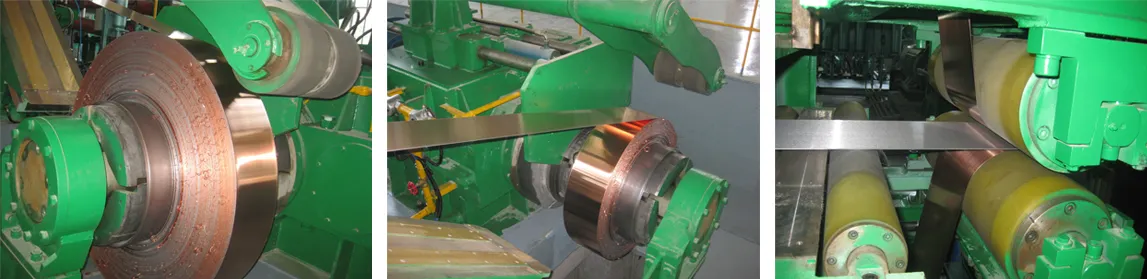
Quality is fundamental to the enterprise survival. We have established a comprehensive and meticulous quality management system and have successfully obtained ISO14000 certification. Starting from the design source, it supervises the entire production cycle, including design, procurement, processing, assembly, in-factory testing, installation, and online commissioning. The workshop is equipped with measuring tools like vernier calipers, spectrometers, hardness testers, and ultrasonic flaw detectors. They are used to check materials and control tolerances to ensure the final equipment meets or exceeds requirements. All products have a unique code, This enables the easy identification and traceability of the equipment components and ensures full control of quality.


-
 Optimized Water Quenching Process & Devices for Metal Heat TreatmentIntroduction to Advanced Quenching Technologies In the demanding world of metallurgy and material science, precise heat treatment is paramount to achieving desired material properties. Among various heat treatment methods, quenching stands out as a critical process for enhancing hardness and strength in metals. This article delves into the intricacies of the water quenching process , a foundationa
 -
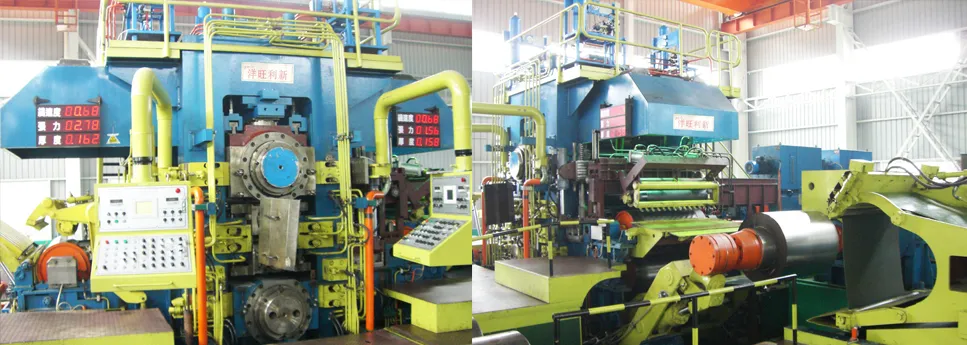 прокатный стан на сталелитейном заводеIn the dynamic landscape of the steel industry, a rolling mill at a steel manufacturing plant stands as a pillar of precision engineering and expert craftsmanship. This pivotal equipment transforms molten steel into essential products used across numerous industries, reflecting not only the plant's capability but also its operational prowess. Rolling mills are the heart and soul of steel productio
 -
 производители станов горячей прокаткиThe Manufacturers of Hot Rolling Mills An In-Depth Look The hot rolling process is a critical stage in the manufacturing of steel and other metals, playing a significant role in shaping and processing materials to meet diverse industrial needs. Central to this process are hot rolling mills, which are complex machines designed to deform and elongate metal at elevated temperatures. This article expl


